
Accessibility & Safety Solutions
Directional & Warning Tactile Indicators
Complete Tactile Solutions for Accessibility & Safe Navigation
At Jinson Asia, we offer a comprehensive range of directional and warning tactile indicators designed to provide clear tactile cues for navigation, hazard awareness and accessible movement throughout the built environment.
Our tactile solutions are available in different materials, configurations and fixing systems to accommodate various floor finishes, installation environments, architectural requirements and project specifications.
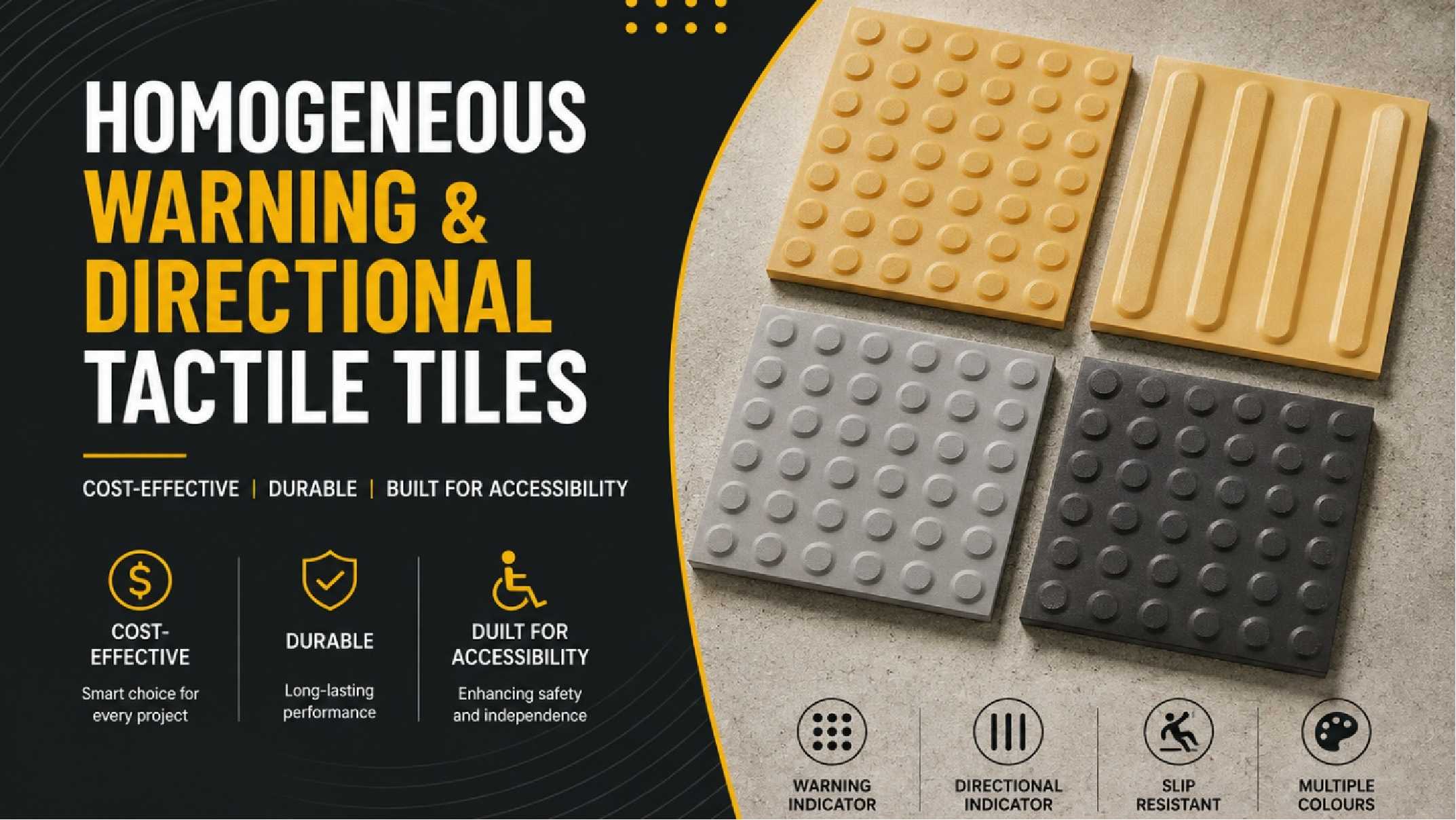
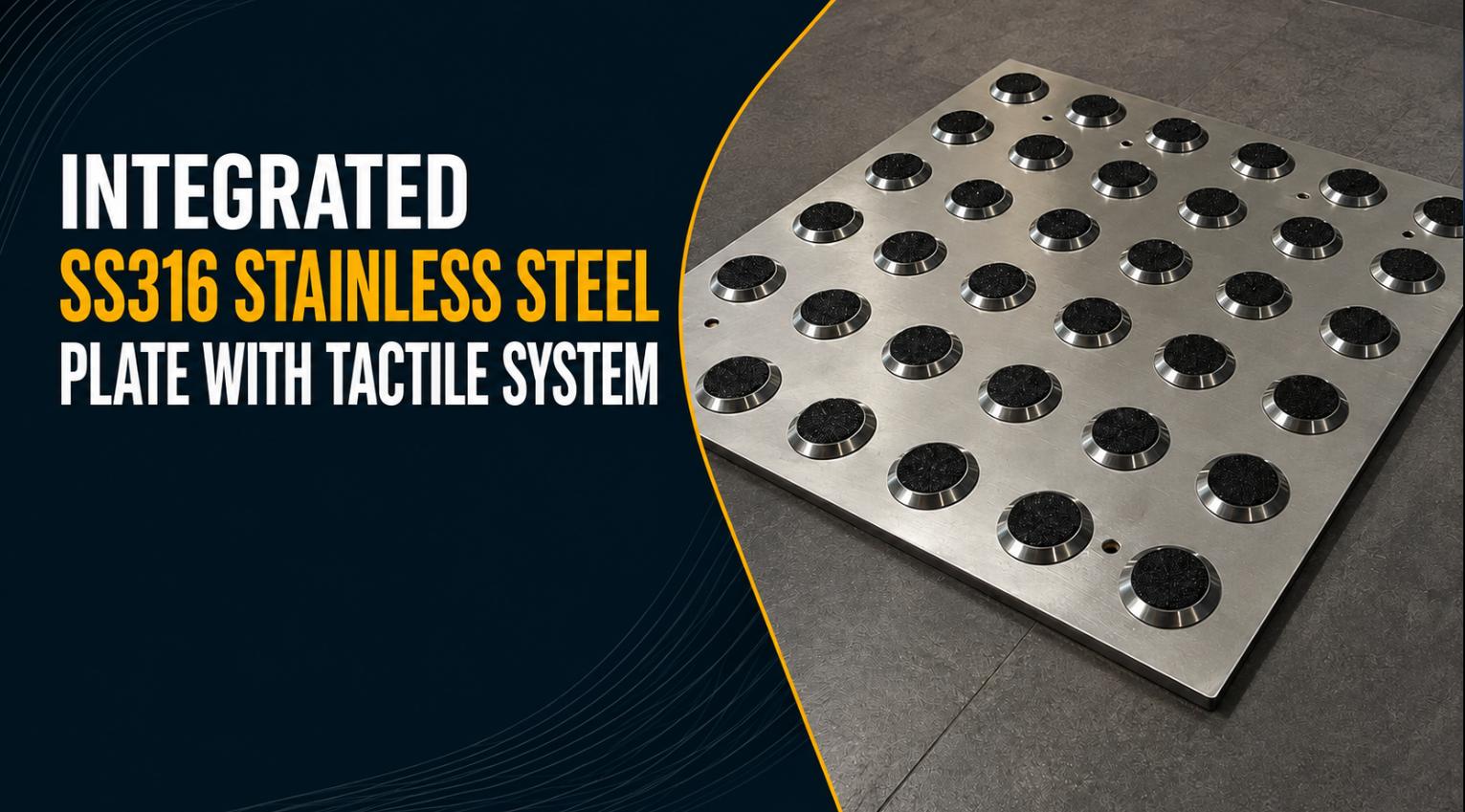
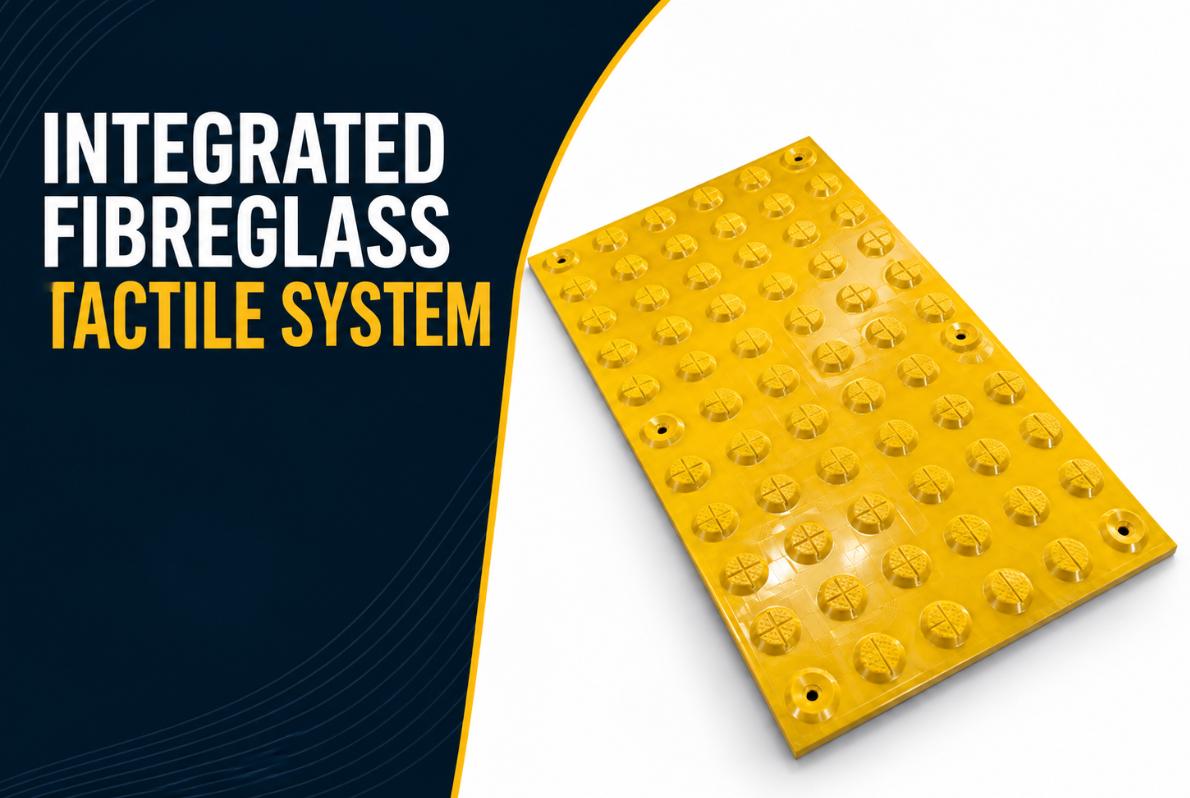
From premium stainless steel tactile indicators to integrated tactile systems, polyurethane (PU) tactile tiles and homogeneous tactile tiles, our product range provides practical solutions for both new construction and accessibility upgrading works.
We work closely with architects, consultants and contractors to recommend suitable tactile systems based on floor finishes, site conditions, installation requirements, durability considerations and project budgets.
Beyond product supply, Jinson Asia provides technical consultation, sample submissions, site assessments, layout planning, measurement and specialised installation support, including stainless steel tactile installations on carpeted surfaces.
Our objective is to deliver reliable, practical and cost-effective tactile solutions while maintaining attention to accurate positioning, installation quality, product performance and architectural appearance.
Key Features & Benefits
Designed for Accessibility. Engineered for Practical Applications.
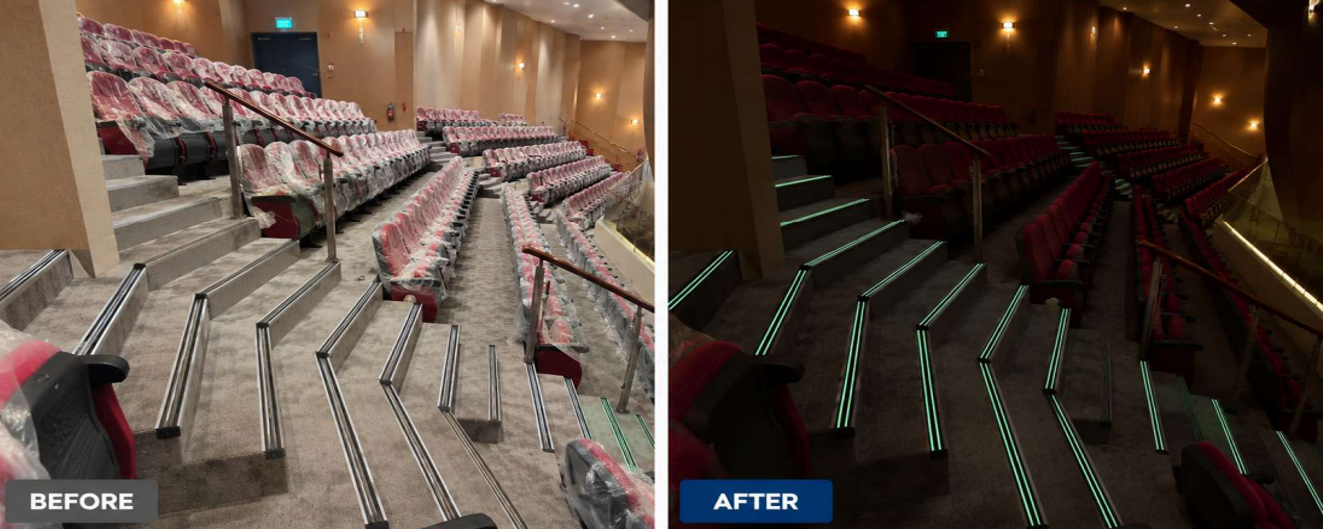
Key Product Benefits
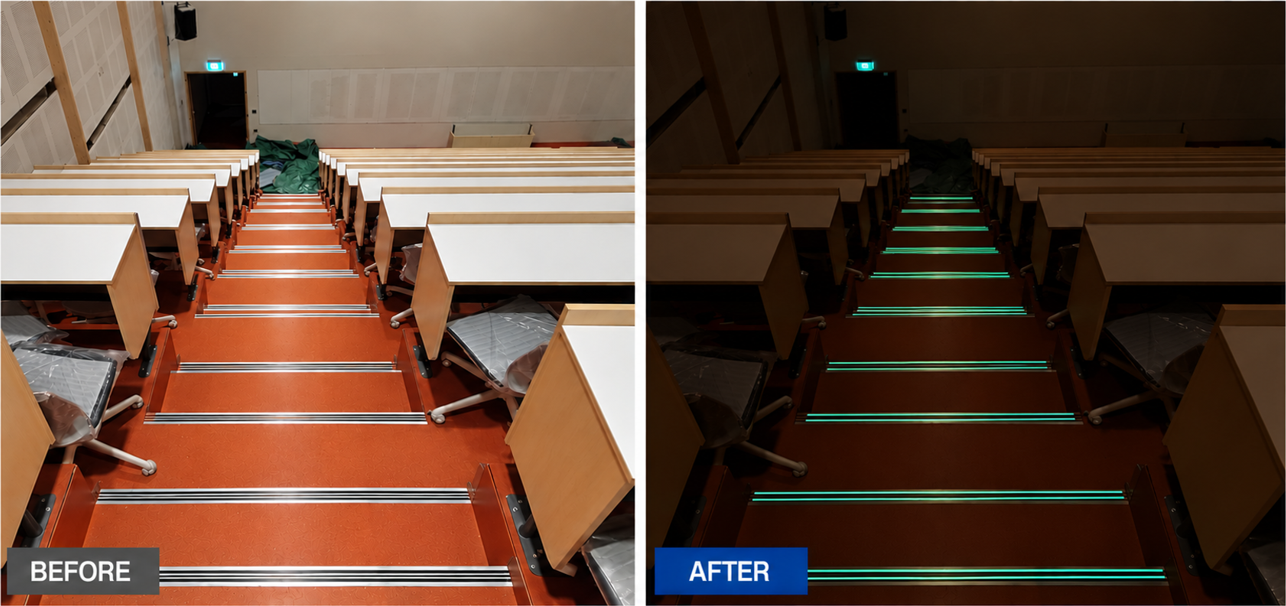
- ENHANCED STEP-EDGE VISIBILITY — Improves the identification of stair edges in low-light environments.
- NO ELECTRICAL POWER REQUIRED — Photoluminescent bands absorb light and provide an afterglow without electrical connections.
- ANTI-SLIP PROTECTION — Incorporates an anti-slip vinyl insert to improve grip and walking confidence.
- SLIM ARCHITECTURAL DESIGN — Premium aluminium construction with a clean, contemporary appearance suitable for modern interiors.
01
Accessibility & Hazard Awareness
Directional and warning tactile indicators provide clear tactile cues for navigation, identify designated routes and alert users to potential hazards, helping to create safer and more accessible environments.
Comprehensive Material Selection
A wide selection of stainless steel, fibreglass, polyurethane (PU) and homogeneous tactile systems provides flexibility in material selection, appearance, installation method and project budget.
03
Solutions for Different Floor Finishes
Tactile systems can be selected for suitable floor finishes including porcelain tiles, natural stone, concrete, vinyl and carpeted surfaces, subject to product compatibility and substrate conditions.
Durable & Low-Maintenance Options
Selected tactile systems offer durable, wear-resistant construction for high-traffic environments, while other options provide practical solutions for indoor applications, refurbishment and temporary works.
05
Flexible Installation Methods
Different fixing systems, including mechanical fixing, adhesive installation and peel-and-stick applications, allow tactile indicators to be installed according to the selected product, floor finish and project requirements.
06
Technical & Installation Support
From product recommendations and sample submissions to site assessment, layout planning and installation coordination, we provide professional support throughout the selection and installation process.
Accessibility Solutions for Public, Commercial & Residential Spaces
Guiding Safer Movement Across the Built Environment.
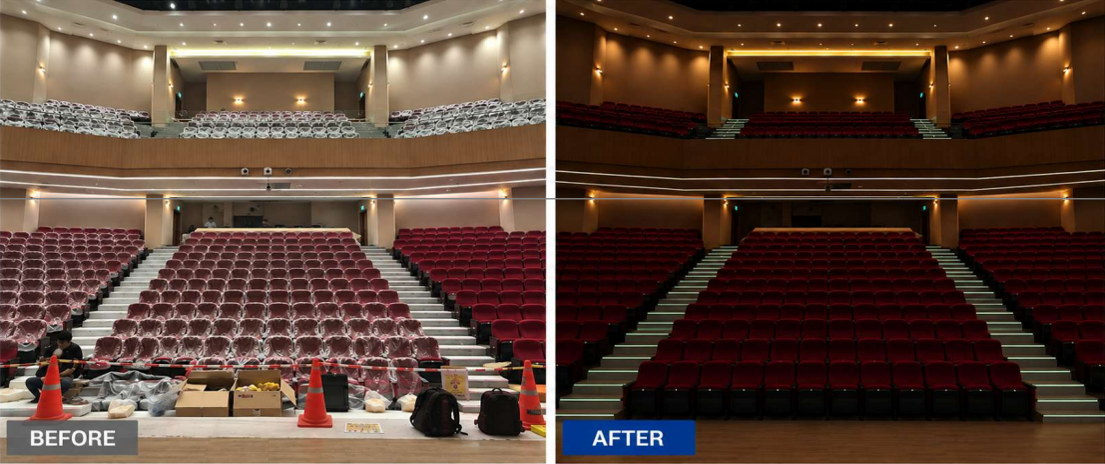
Directional and warning tactile indicators play an important role in creating accessible environments by providing tactile guidance, supporting wayfinding and alerting users to potential hazards.
Jinson Asia offers a comprehensive range of tactile systems for different building types, floor finishes and installation requirements, from high-traffic public infrastructure to commercial developments and residential facilities.
With stainless steel, fibreglass integrated, polyurethane (PU) and homogeneous tactile options available, we work with project teams to recommend suitable solutions based on the intended application, substrate conditions and project specifications.
01
Transport Infrastructure
Tactile solutions for public transport facilities and high-traffic pedestrian circulation areas.
Typical Applications:
- MRT and railway stations
- Transport interchanges
- Station entrances and exits
- Pedestrian access routes
02
Commercial Buildings
Tactile indicators for commercial developments, supporting accessible movement through public and shared circulation areas.
Typical Applications:
- Office buildings
- Commercial developments
- Lift lobbies
- Building entrances and circulation areas
03
Educational Institutions
Directional and warning tactile systems for educational facilities and shared pedestrian areas.
Typical Applications:
- Schools
- Universities
- Polytechnics
- Campus circulation areas
04
Healthcare Facilities
Tactile solutions for healthcare environments where clear navigation and accessible pedestrian movement are important.
Typical Applications:
- Hospitals
- Specialist medical centres
- Clinics
- Healthcare circulation areas
05
Government & Public Buildings
Accessibility solutions for government facilities and public buildings serving a wide range of users.
Typical Applications:
- Government offices
- Public service facilities
- Community buildings
- Public circulation areas
06
Residential Developments
Tactile indicators for shared and communal spaces within residential developments.
Typical Applications:
- Condominium developments
- Residential lift lobbies
- Common access areas
- Shared pedestrian routes
Hotels, Hospitality & Shopping Centres
Tactile solutions that support accessibility while accommodating different architectural finishes.
Typical Applications:
- Hotels and hospitality venues
- Shopping malls
- Main entrances and lift lobbies
- Public circulation areas
Industrial & Mixed-Use Developments
Practical tactile solutions for industrial facilities and developments combining different building functions.
Typical Applications:
- Industrial buildings
- Mixed-use developments
- Shared access areas
- Common pedestrian circulation routes
Recommended Applications
Our Tactile Product Range
Different Materials. Different Applications. One Complete Solution.
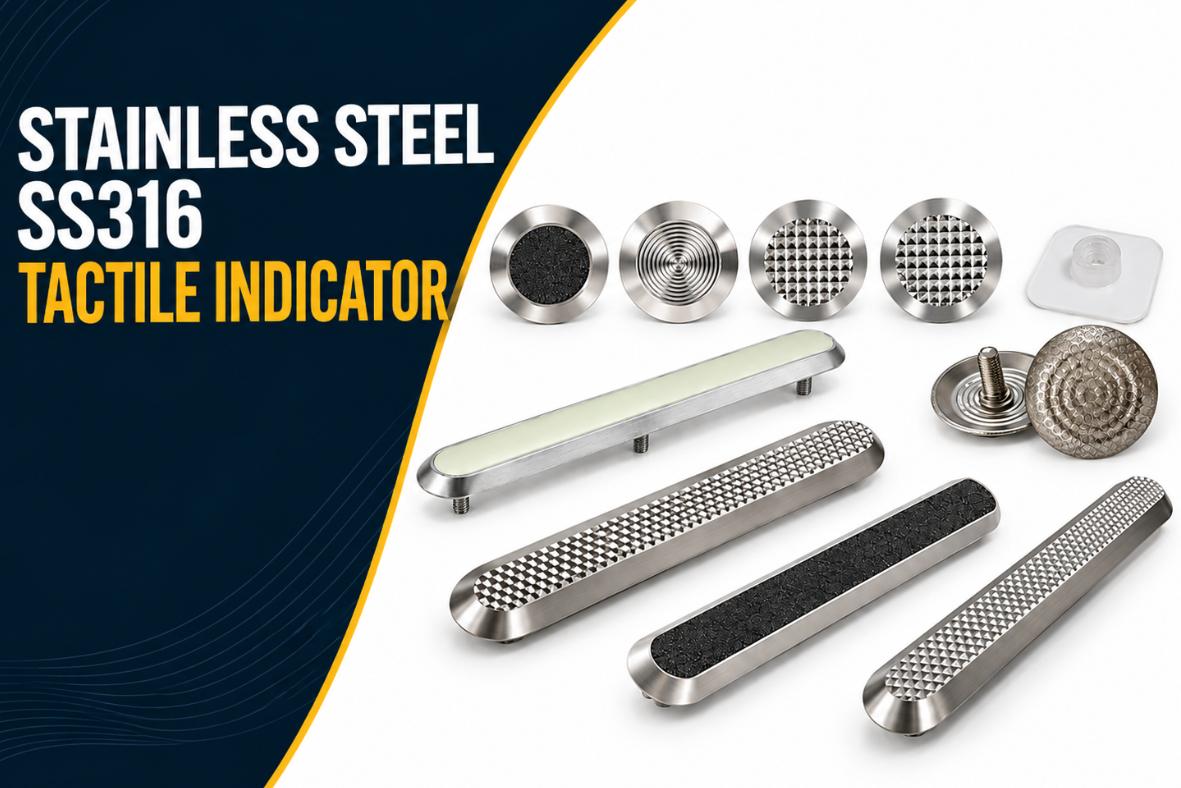
The Right Tactile System for Every Project Requirement.
At Jinson Asia, we offer a comprehensive selection of directional and warning tactile indicators designed to accommodate different floor finishes, installation conditions, architectural requirements and project budgets.
From individual stainless steel tactile studs and bars to prefabricated integrated systems and tactile tiles, our product range provides practical solutions for new developments, upgrading works and accessibility improvement projects.
We work closely with architects, consultants and contractors to recommend suitable tactile systems based on project specifications, substrate conditions, pedestrian traffic and installation requirements.
Specialised Installation & Project Support
Beyond Product Supply. Delivering Practical Installation Solutions.
Different Floor Finishes. Different Installation Requirements. One Experienced Project Partner.
At Jinson Asia, we recognise that successful tactile installation requires more than selecting the right product.
Different floor finishes, substrate conditions and project environments require careful assessment, accurate setting-out and appropriate fixing methods to achieve a secure, consistent and professional installation.
Our installation support covers individual stainless steel tactile studs and directional bars, integrated tactile systems, polyurethane (PU) tactile tiles and homogeneous tactile solutions, with methods selected according to the product and site requirements.
From initial site assessment and measurement to material preparation, installation coordination and final inspection, we work closely with contractors, consultants and project teams to deliver practical tactile solutions.
Our Installation & Project Support
Practical Solutions for Different Floor Finishes.
01
Site Assessment & Floor Finish Evaluation
Review existing floor finishes, underlying substrates, installation conditions and project requirements to determine the most suitable tactile system and fixing arrangements.
02
Tactile Layout & Accurate Setting-Out
Establish warning and directional tactile layouts according to approved drawings, with attention to positioning, spacing, alignment and orientation.
03
Stainless Steel Tactile Installation
Installation of individual stainless steel warning studs and directional bars on suitable floor finishes using project-appropriate drilling, anchoring and fixing methods.
04
Specialised Installation on Carpeted Surfaces
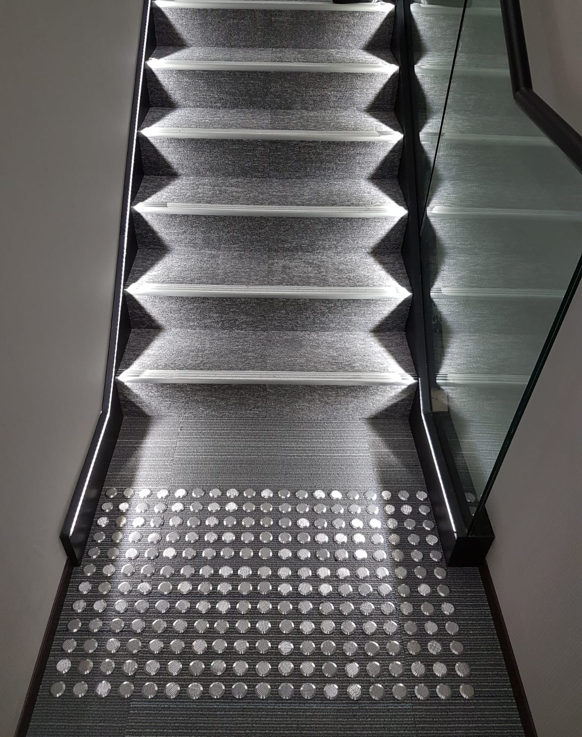
Project-specific installation of stainless steel tactile indicators on carpeted floors, taking into consideration carpet construction, underlying substrate, tactile positioning and fixing requirements.
05
Integrated & Adhesive-Fixed Systems
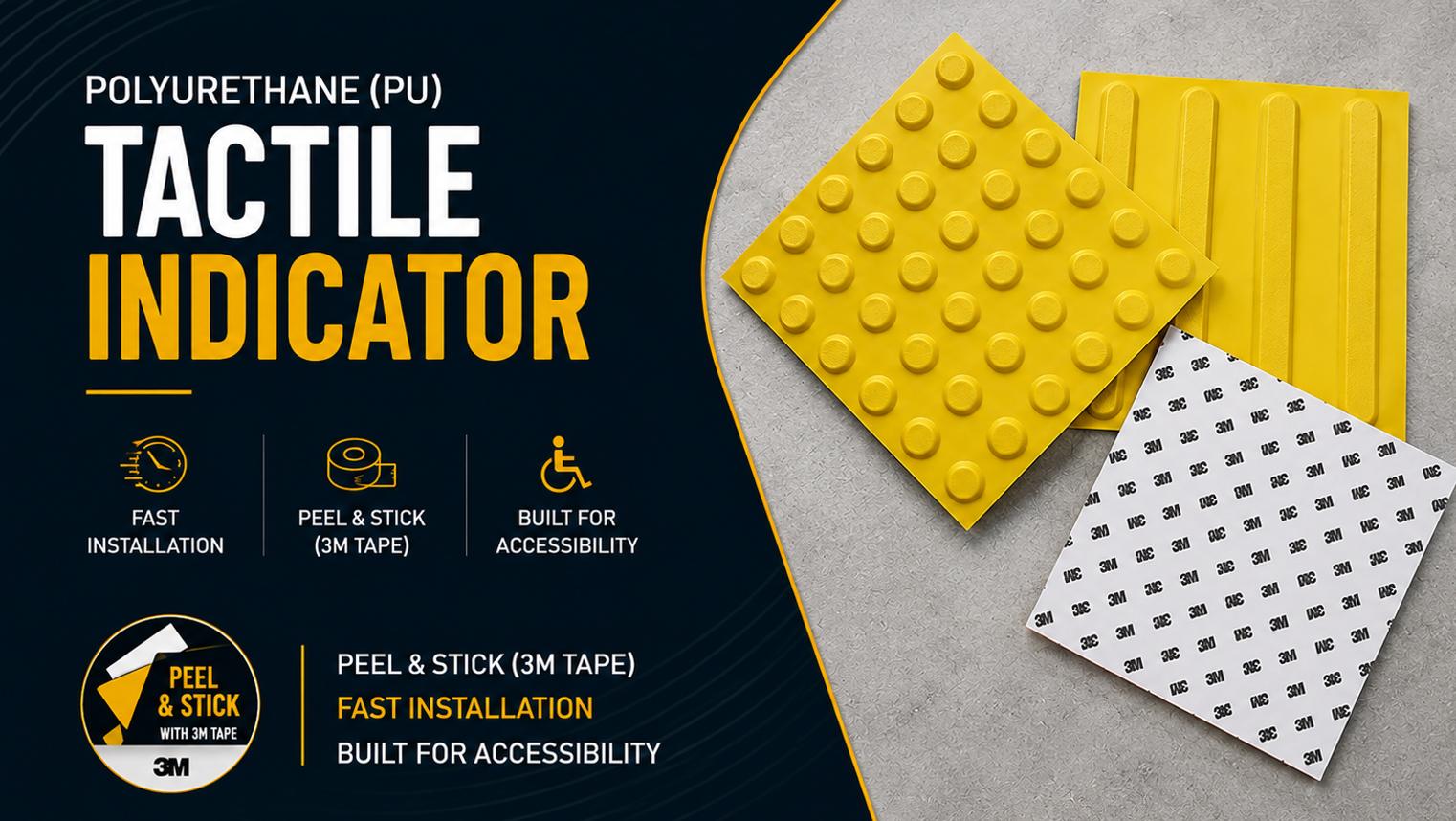
Installation support for stainless steel integrated tactile plates, fibreglass integrated systems and polyurethane (PU) tactile tiles, with appropriate surface preparation, fixing methods and alignment.
06
Project Coordination & Final Inspection
Coordination of site access, installation sequencing and workmanship checks to ensure consistent installation quality, followed by final inspection before project handover.
Specialised Stainless Steel Tactile Installation on Carpet
A Different Approach. A More Precise Installation.
Installing stainless steel tactile indicators on carpeted surfaces presents unique challenges compared with conventional hard-floor installations.
Traditional methods often involve drilling through the carpet into the underlying substrate. This may damage or contaminate the carpet during installation. Furthermore, when tactile indicators are secured directly to the underlying substrate using adhesive, carpet fibres may exert upward pressure, affecting the seating and stability of the indicators.
Our Solution — Direct Carpet Installation with a Plastic Locking System
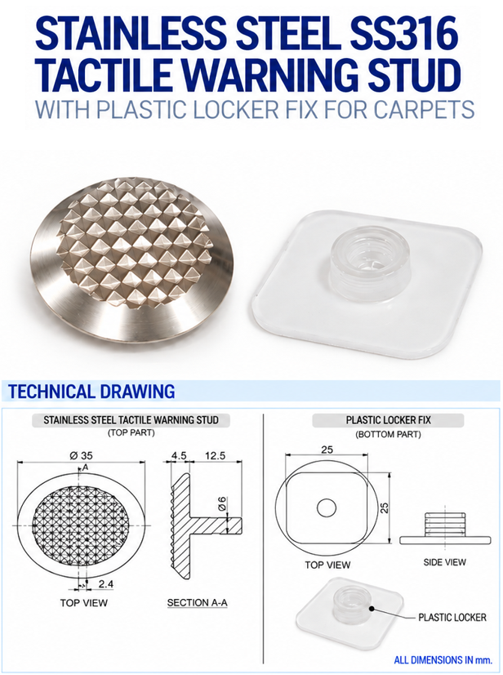
Jinson Asia adopts a specialised mechanical locking method in which individual stainless steel tactile indicators are positioned on the carpet surface and secured using dedicated plastic locking components installed underneath the carpet.
This arrangement allows the tactile indicators to be mechanically secured through the carpet without drilling into the underlying floor substrate.
Although the process requires additional labour, careful positioning and precise workmanship, it is designed to provide a secure fixing arrangement while minimising disturbance to the existing carpet and maintaining consistent tactile alignment.
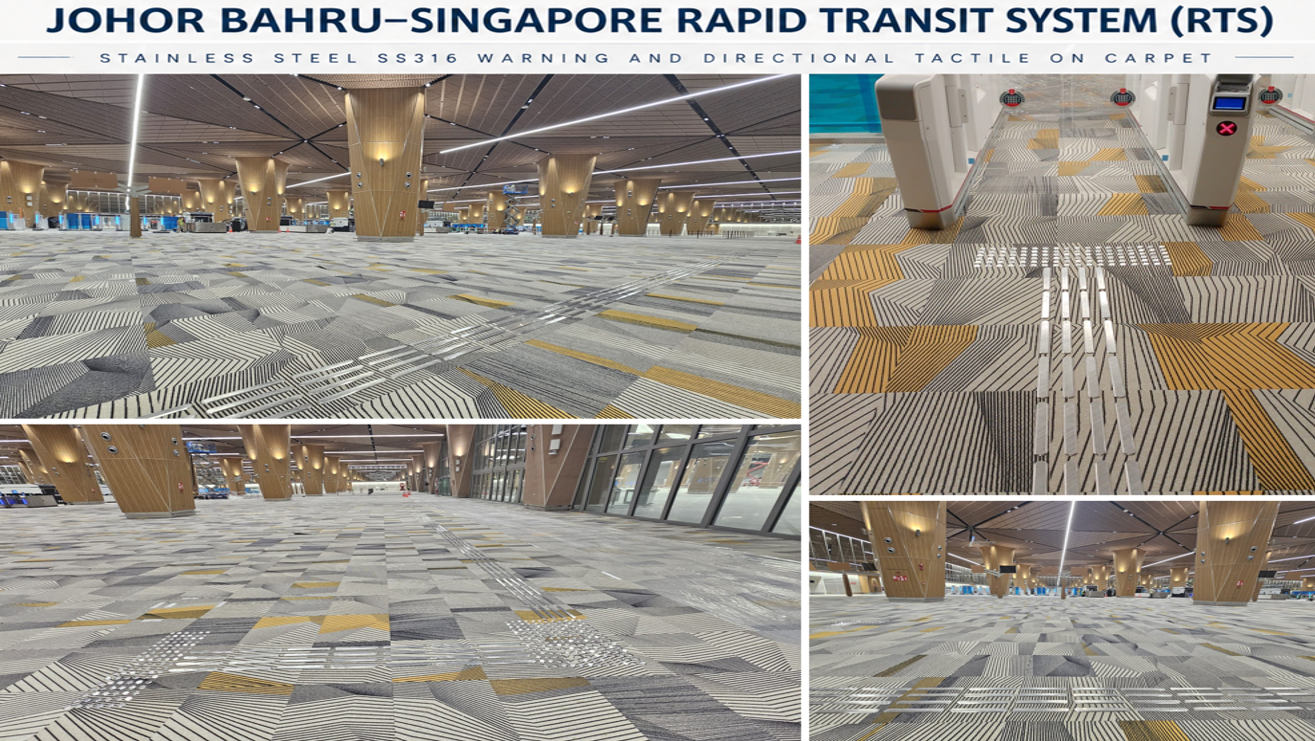
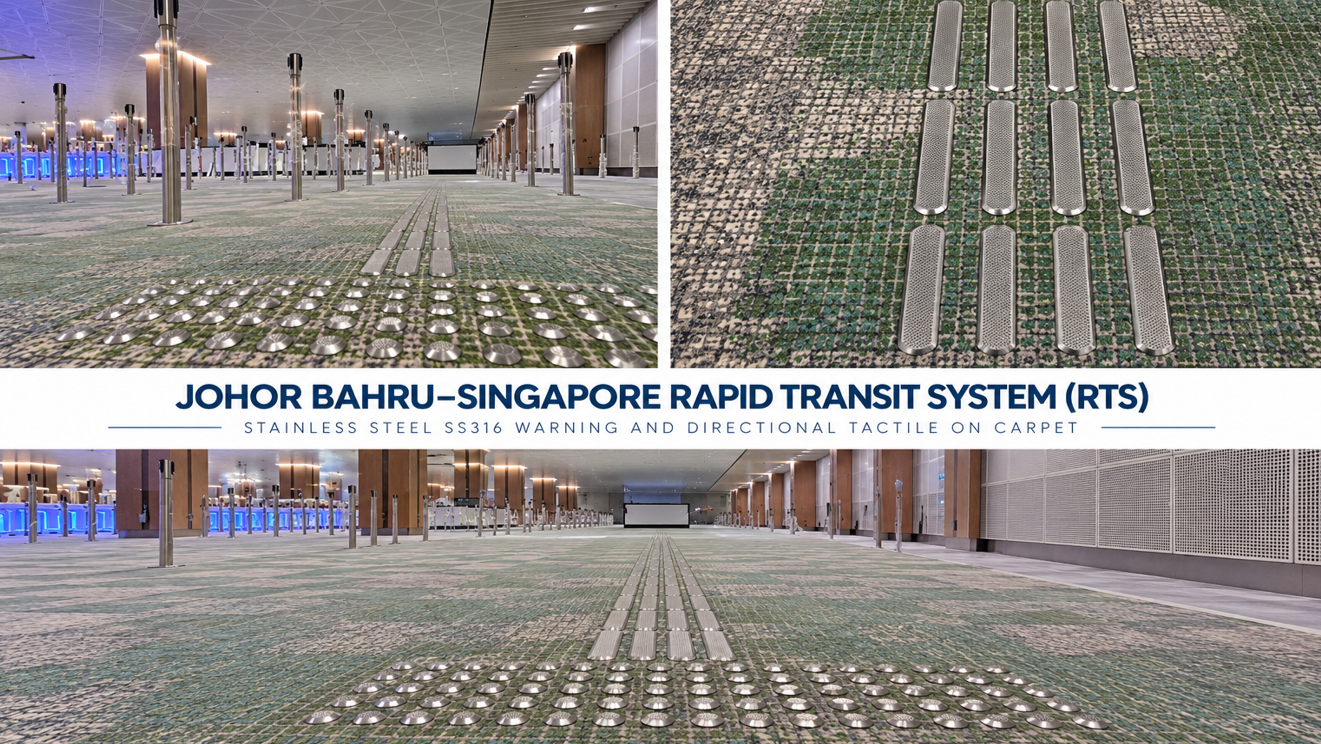
Johor Bahru–Singapore Rapid Transit System (RTS)
Stainless Steel SS316 Warning and Directional Tactile on Carpet
Repetitive Fatigue Performance
2 million cycles without exceptional change
Method: Internal fatigue test
Device: Fatigue testing machine
Test content: 2 million cycles at 980 N, 40 cycles per minute
Reported result: Normal
Dimensional Stability
Elongation and contraction
Method: Dimensional stability test
Device: Heating experiment machine
Test content: Heating for 6 hours at 80°C ± 1°C; shrinkage reference 0.5 mm
Reported result: 0–0.6%
Weathering Performance
300 hours without exceptional change
Method: JIS-A-1415 “Exposed Testing Method of Plastic Building Material”
Device: Sunshine weather meter
Test content: 300 hours of sunlight exposure
Reported result: Normal
Results and test descriptions shown are from the supplied manufacturer information.
Supply Only or Supply & Installation
Choose the supply arrangement that suits your project.
RTS Tactile Installation Details
SS316 Warning Studs & Directional Bars on Carpet
The NAKA HI-STEP SLIM CK NAP50CK can be considered for installation on various staircase finishes, subject to substrate condition, fixing requirements and project specifications.
Potential substrates include:
- Concrete and cementitious surfaces
- Porcelain tiles
- Marble and granite
- Timber
- Carpeted staircases
- Metal staircases
Installation generally involves suitable mechanical fixings together with compatible construction adhesive, where required.
Fixing methods and installation details should be assessed according to the staircase substrate, site conditions and manufacturer’s recommendations.
Technical Documentation & Project Support
Jinson Asia provides product information and technical coordination to assist architects, consultants and contractors with product selection and material submissions.
Our support includes technical consultation, product samples, site assessment, measurement and installation coordination.
Available for Supply Only or Supply & Installation.
Supply Only or Supply & Installation
Choose the supply arrangement that suits your project.
Carpet Installation Methods
Conventional Installation vs Our Specialised Approach
A Dedicated Mechanical Locking System for Carpeted Surfaces
Conventional Installation
Drilling through the carpet into the underlying substrate.
Potential carpet damage
Drilling through the carpet may damage the carpet finish and create visible holes, affecting the appearance of the floor.
Drilling-related dust and contamination
The drilling process can generate dust and debris, which may dirty the carpet and surrounding area.
Risk of insecure fixing
When fixed to the underlying substrate using adhesive, carpet fibres may push the tactile indicator upward, affecting its seating and stability.
Jinson Asia’s Specialised Approach
Direct installation on carpet using a plastic locking system underneath the carpet.
No drilling into the underlying substrate
Avoids drilling into the underlying substrate, helping to protect the carpet finish.
Dedicated mechanical locking system
Plastic locking components positioned underneath the carpet mechanically secure the stainless steel tactile indicator.
Improved fixing security
The locking arrangement helps prevent carpet fibres from pushing the tactile indicator upward, allowing for a more secure installation.
01
Minimised Carpet Disturbance
Avoids drilling into the underlying substrate, helping reduce drilling-related dust and potential damage to the carpet finish.
02
Dedicated Mechanical Locking System
Plastic locking components positioned underneath the carpet mechanically secure the stainless steel tactile indicators.
03
Improved Tactile Seating
The locking arrangement helps address installation challenges caused by carpet fibres exerting upward pressure on tactile indicators fixed to the underlying substrate.
04
Precise Positioning & Alignment
Careful setting-out and individual installation support consistent spacing, alignment and orientation of warning and directional tactile indicators.
05
Specialised Workmanship
A more labour-intensive installation process that prioritises fixing security, installation accuracy and the finished appearance.
06
Project Coordination & Final Inspection
Coordination of site access, installation sequencing and workmanship checks to ensure consistent installation quality, followed by final inspection before project handover.